

How to Set Up a Bird Feeding Station in Your Backyard
The spot beside the patio looks ideal: you can see the feeders from your chair, and they’re close enough for quick refills. But before you push the pole into the ground, check what’s around it. A nearby railing could give squirrels a jumping point, while feeders hung over the water bowl could leave you changing dirty water more often.
A little planning now makes a bird feeding station much easier to enjoy later. Start with the location, secure the pole, then arrange the accessories around your everyday routine.
1. Choose a Spot You Can Watch and Maintain
Look at the proposed location from wherever you usually watch the yard—your kitchen window, living room, or patio chair. Then walk out to it.
Can you reach the station comfortably with seed or fresh water? Is there room to remove a feeder without stepping into a flower bed? Choose a spot you’ll still want to visit when the ground is damp.
Also check:
- Windows: Avoid placing feeders a few feet out from untreated glass. Cornell recommends keeping feeders within 3 feet of a window when using a close-to-window location, which reduces the speed birds can build up before a collision. Exterior bird-safe window treatments add protection.
- Squirrel access: For a pole-and-baffle setup, aim for at least 10 feet from branches, fences, and other jumping points.
- Cover: Trees and shrubs can give birds somewhere to retreat, but avoid placing feeders directly above dense ground-level vegetation where a cat could hide.
These considerations need to work together. A close-to-window position may reduce collision severity but put the station near a squirrel’s jumping route. If that spot creates a conflict, choose another location rather than relying on the baffle alone.
2. Secure the Pole Before Adding Food and Water
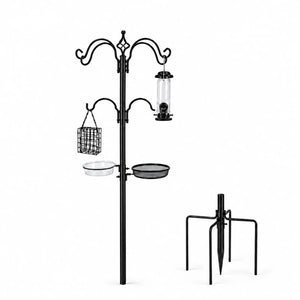
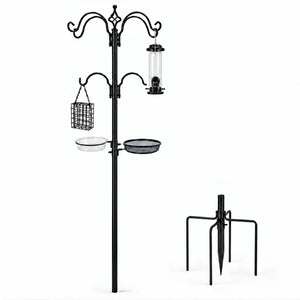
Joywink’s 83″ and 97″ bird feeding stations use an in-ground base. They need to be installed in soil; the supplied base is not designed to stand directly on a patio or deck.
Follow the assembly instructions and insert the base approximately 8.3 inches (21 cm) into suitable soil. Check that the pole is upright and the connections are secure before hanging accessories.
If the soil won’t hold the station firmly, relocate it rather than adding weight to an unstable setup. After adding feeders and water, check it again. Recheck after heavy rain or whenever you notice leaning.
3. Arrange Accessories for Easy Refills
You don’t need to fill every hook on day one. Start with a manageable setup and leave enough space to lift feeders off their hooks.
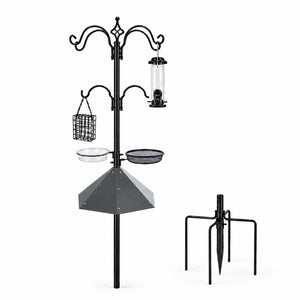
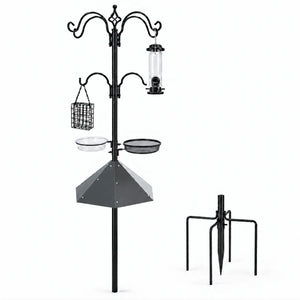
Both Joywink sizes have two adjustable lower hooks and separate height-adjustable support rings for the mesh feeding tray and bird bath.
| Accessory | Placement priority |
|---|---|
| Tube feeder | Leave room to lift it off the hook for refilling and cleaning. |
| Suet cage | Keep the top door easy to reach and open. |
| Mesh feeding tray | Position it where you can add seed and remove leftovers comfortably. |
| Bird bath | Keep it accessible for water changes and out from directly beneath feeders where possible. |
Avoid crowding accessories together. Check that hanging feeders have room to move without hitting one another or the bowl.
If you’re using a baffle, keep the lower hooks above it and check the clearance beneath each hanging feeder. Our squirrel-baffle setup guide explains the recommended positions.
4. Start Small and Build a Simple Routine
Choose food suited to the feeder. Sunflower seed is a useful starting point for many backyard seed-eating birds; use a suet cake in the suet cage rather than loose seed.
Start with modest amounts so you can see what gets eaten. Keep food dry, remove wet or moldy leftovers, and check the water daily. Position the station so spilled seed and hulls underneath are easy to clear.
Allow time for birds to discover the new feeding station. Avoid moving it repeatedly just because visits don’t begin immediately. Instead, observe what happens: which feeder gets used, whether food stays dry, and whether any accessory is awkward to maintain.
Before You Finish, Try One Refill
Walk through the routine while the setup is still new:
- Take the tube feeder down and hang it back up.
- Open the suet cage.
- Reach the mesh tray.
- Remove and replace the water bowl.
- Check the loaded pole for leaning or loose connections.
If anything feels awkward, adjust it now.
Still deciding between station sizes? Our bird feeder pole height guide compares the installed hanging heights of the 83″ and 97″ models.
A good backyard bird feeding station should be easy to look after as well as pleasant to watch. Get the daily tasks right, and the setup becomes a part of your yard you’ll keep enjoying.